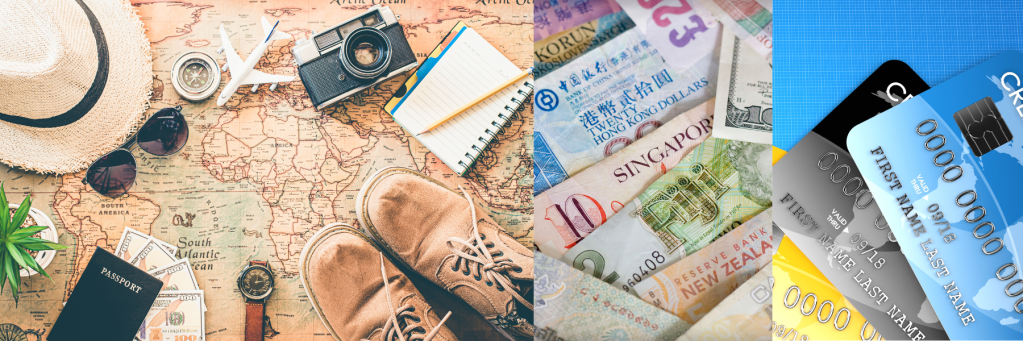
When I first started traveling, I remember wanting to buy a postcard as a keepsake. The shopkeeper pointed to a sign: “Minimum €10 for card payments.” Back then, cash was king, and having coins and bills on hand was just part of the routine.
Fast forward to today, and the trend has flipped – many businesses now prefer card for speed, convenience, and security. I often travel with far less cash than I used to.
But my trip to Seville in April 2025 taught me a big lesson. France, Spain, and Portugal experienced a massive power outage that also took down telecommunication lines. Suddenly:
- No card payments → POS systems and ATMs were offline.
- No mobile payments → Phones couldn’t connect to networks.
- No navigation apps or ride-share → Google Maps, Uber, and even taxis were out of reach.
In that moment, the travellers who had a bit of cash could still buy food, pay for taxis, and keep moving. Those without were stranded.
That experience reminded me: 💡 even in a digital-first world, it’s smart to always carry a little local currency. You may not use it often—but when you need it, you’ll be very glad you have it.
In those cases, cash becomes the only reliable option for essentials like food, transport, and even accommodation.
Disclaimer: The following is not an exhaustive list of all the pros and cons of each option. I recommend doing research on your destination to know what option(s) will fit your travels best.
1. Cash
✅ Pros of Using Cash
- Universally Accepted – Even in remote areas or small shops that don’t take cards, cash works.
- No Extra Fees – Avoids foreign transaction fees, card surcharges, or ATM withdrawal charges (if brought from home).
- Easier Budgeting – Physically seeing how much you have left helps control spending.
- Faster Transactions – No waiting for card machines or worrying about connectivity issues.
- Bargaining Power – Markets, taxis, and local vendors may give discounts for cash.
- Backup Option – Useful if your card is lost, stolen, or blocked.
❌ Cons of Using Cash
- Theft Risk – If stolen or lost, it’s gone forever (unlike cards which can be frozen).
- Bulky & Inconvenient – Carrying large sums isn’t practical or safe.
- Exchange Rate Losses – Exchanging at airports, hotels, or tourist spots often means worse rates.
- Limited Protection – Unlike credit cards, there’s no fraud protection or chargeback if you’re scammed.
- Not Always Practical – Hotels, airlines, car rentals, and some restaurants may require cards for security deposits or bookings.
- Counterfeit Risk – Some destinations have higher risks of fake bills in circulation
2. Credit Cards
✅ Pros of Using Credit Cards
- Widely Accepted – Most hotels, airlines, rental cars, and large businesses prefer (or require) cards.
- Security & Fraud Protection – Unlike cash, if your card is lost or stolen, you can cancel it and dispute charges.
- Rewards & Perks – Earn points, miles, or cashback; some cards include lounge access, upgrades, or concierge services.
- Travel Insurance Benefits – Many cards provide coverage for trip delays, cancellations, car rental insurance, or lost luggage.
- Better Exchange Rates – Often more favorable than airport or hotel currency exchange rates.
- Convenience – No need to carry large sums of cash; track spending easily.
❌ Cons of Using Credit Cards
- Foreign Transaction Fees – Some cards add 2–3% on each international purchase (though many travel cards waive this).
- Acceptance Limits – Smaller shops, markets, and remote areas may be cash-only.
- Minimum Purchase Requirements – Some stores require a minimum spend to use a card.
- Dependence on Technology – If there’s a power outage or network issue (like the April 2025 blackout in Spain, France & Portugal), cards won’t work.
- Potential Overspending – Easy to swipe without noticing how much you’ve spent.
- Security Deposits & Holds – Hotels and rental car companies may place large temporary holds, limiting available credit.
3. WISE (formerly TransferWise)
Wise is a powerful tool for international money management—transparent, cost-effective, and user-friendly. It’s ideal for travellers, expats, and those dealing across borders. However, given its limitations (e.g., no banking license, risk of account freezes, varying regional support), it works best when used alongside a traditional bank as a complementary service.
✅ Pros of WISE
- Transparent and Low Fees – Wise offers highly competitive exchange rates, with no hidden markups and upfront pricing, often significantly better than traditional banks.
- Multi-Currency Account – You can hold, convert, send, and receive in up to 40 currencies
- Fast and Convenient Transfers – Transfers typically happen within 1–2 business days, sometimes even instantly, supported by real-time tracking.
- Mobile-Friendly Interface – The user experience, across web and mobile, is smooth and intuitive, making for easy navigation and account management.
❌ Cons of WISE
- Transfer Delays & Limits – Certain routes or payment methods may involve delayed processing and strict transfer limits.
- ATM Withdrawal Limits – Free withdrawals are limited (e.g., up to $100 or £200 monthly); after that, a percentage fee plus a flat charge may apply.
- Not a Traditional Bank – Wise is an Electronic Money Institution – not a bank. It doesn’t offer services like overdrafts, loans, credit cards, or interest-bearing accounts (unless using Wise Assets)
- Account Freezes and Customer Support Issues – Some users have reported sudden account freezes, delays in funds access, and unresponsive support.
Want to Try Wise?
Use my link and you can get zero fees on a transfer up to CA$800.
* Offer subject to change.
4. Travellers Checks
While traveler’s checks offer certain benefits like security and fixed exchange rates, their limited acceptance and the rise of digital payment methods have made them less practical for modern travellers. It’s advisable to consider your destination and payment options before deciding to use traveler’s checks.
Final Thoughts
Each payment option has its strengths and limitations. Many experienced travellers recommend a combination of methods: cash for small purchases, tips and emergencies, a credit card for larger transactions, and Wise or prepaid cards for multi-currency management. Traveler’s checks may still serve as a secure backup in certain regions.

 EXPLORE WONDER TRAVEL CO